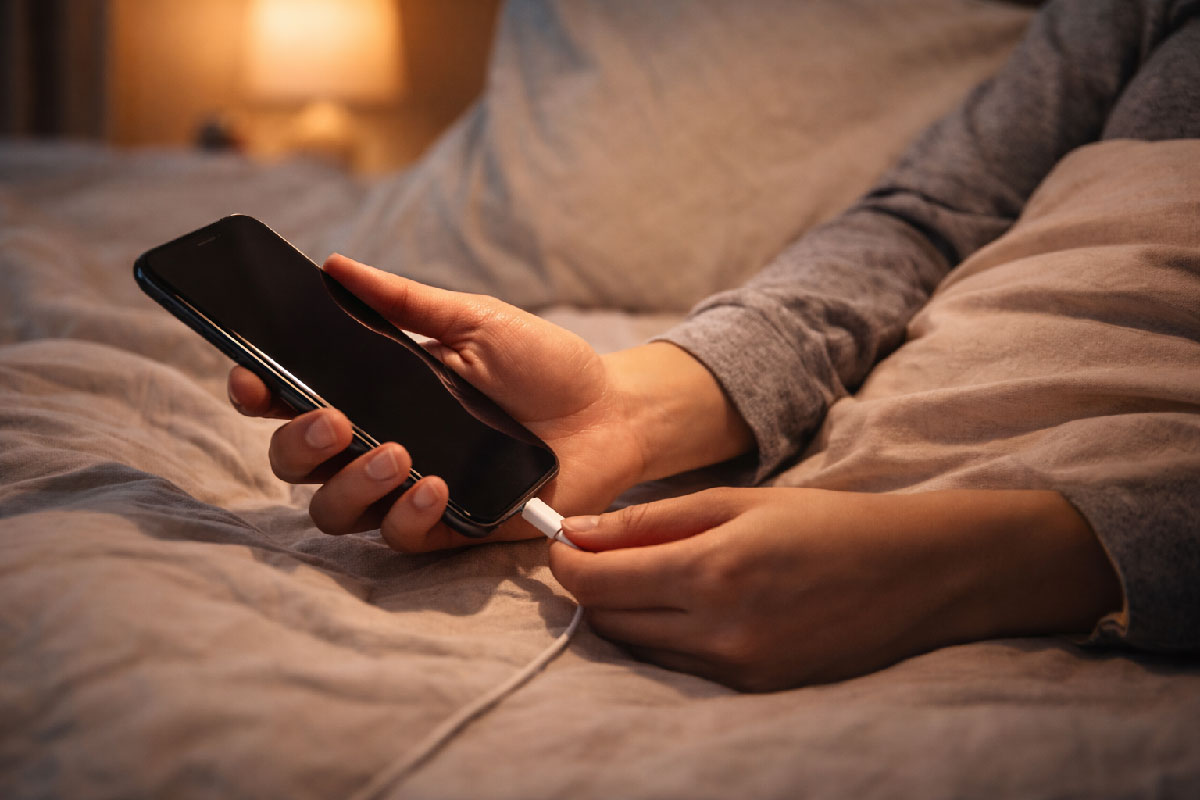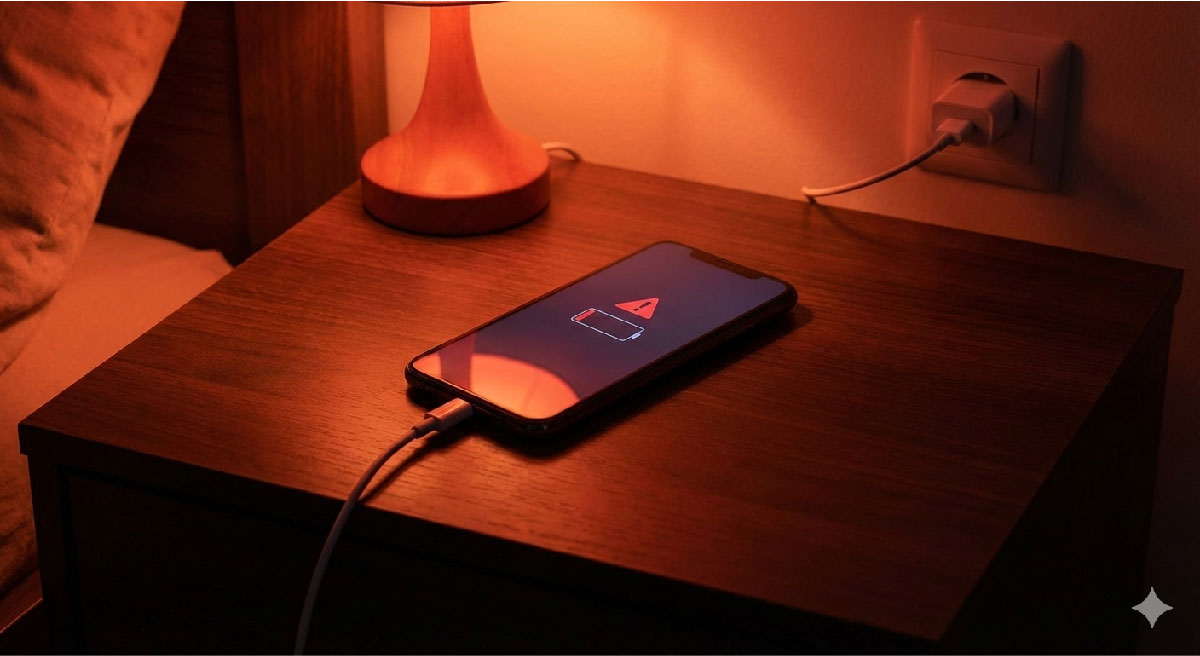
You plug in your phone every night before bed. It charges to 100%. You wake up, unplug it, and start your day. This routine feels normal, even responsible. But that nightly habit might be quietly wearing down your battery faster than it should.
Most people don’t think much about how they charge their phones. It’s just part of the daily rhythm. Yet the way lithium-ion batteries work means some charging habits cause more wear than others, even when everything seems fine on the surface.
1. The Problem With Staying at 100%
When your phone hits 100% and stays plugged in for hours, the battery experiences what’s called high voltage stress. Lithium-ion batteries don’t like sitting at full charge for extended periods. Think of it like keeping a rubber band stretched tight for hours. Technically it’s fine, but over time, that constant tension degrades the material.
Your phone tries to manage this by letting the charge dip slightly, then topping back up. But keeping the battery hovering near maximum capacity still creates strain. The chemical reactions inside the battery cells operate under more stress at high charge levels, and this accelerates the gradual loss of capacity that all batteries eventually face.
2. What Happens While You Sleep
Charging overnight means your phone might sit at or near 100% for six, seven, even eight hours. During that time, the battery management system works to maintain that full charge. Every time it trickles power back in to compensate for tiny losses, it’s running a mini charge cycle.
Most modern phones have optimization features that try to reduce this damage. They might learn your routine and delay charging to 100% until just before you wake up. But not everyone has these features enabled, and they don’t eliminate the issue entirely. They just reduce it.
3. The Heat Factor Nobody Mentions
Charging generates heat. It’s usually subtle, not enough to notice unless you’re paying attention. But heat and high charge states together create a particularly harsh environment for battery longevity. When your phone charges to full and sits on your nightstand, potentially under a pillow or blanket, that trapped warmth compounds the stress.
Batteries degrade faster at higher temperatures. Even a few extra degrees maintained over months and years makes a measurable difference. If you’ve ever wondered why your phone feels warm in the morning despite just sitting there, this is part of the reason.
4. The Sweet Spot Most People Ignore
Battery researchers generally agree that lithium-ion cells experience less wear when kept between roughly 20% and 80% charge. This range represents a more relaxed state for the battery’s chemistry. The reactions happen more gently, the voltage stress stays lower, and the overall degradation slows down.
You don’t need to obsess over exact percentages. But if you could keep your phone from sitting at 100% for hours every single night, you’d reduce cumulative wear over the months you own that device. The difference shows up gradually, not immediately. A battery that might drop to 85% health after two years could stay closer to 90% with gentler charging habits.
5. What Actually Works Better
Instead of plugging in at night, consider charging during times when you can unplug relatively soon after reaching full. Morning routines, while getting ready for work, during lunch breaks. These shorter sessions mean less time at maximum charge.
Some people set a charge limit using built-in phone features or shortcuts. Others just aim to unplug around 80% or 90% when possible. Neither approach requires constant monitoring. Just a shift in when and how long you charge.
6. Why You Feel Like Nothing’s Wrong
Modern phones hide battery degradation well. The percentage reads the same. The phone still works. But capacity loss is gradual and becomes obvious only after significant decline. By the time you notice your phone dying faster, the damage accumulated over many months of charging habits.
Your phone might show 100%, but if the actual capacity has dropped from 3000mAh to 2500mAh, that 100% represents less actual power. You’re experiencing the consequences of past charging patterns without realizing those patterns caused the issue.
7. Small Changes Add Up
Nobody’s suggesting you stress over every charging session. Phones are tools meant to be used conveniently. But understanding that overnight charging to 100% creates extra wear gives you options. Charge when it fits your routine, unplug sooner when you can, and your battery will likely hold up better over time.
The goal isn’t perfection. It’s just being aware that leaving your phone plugged in all night, every night, isn’t as harmless as it seems.